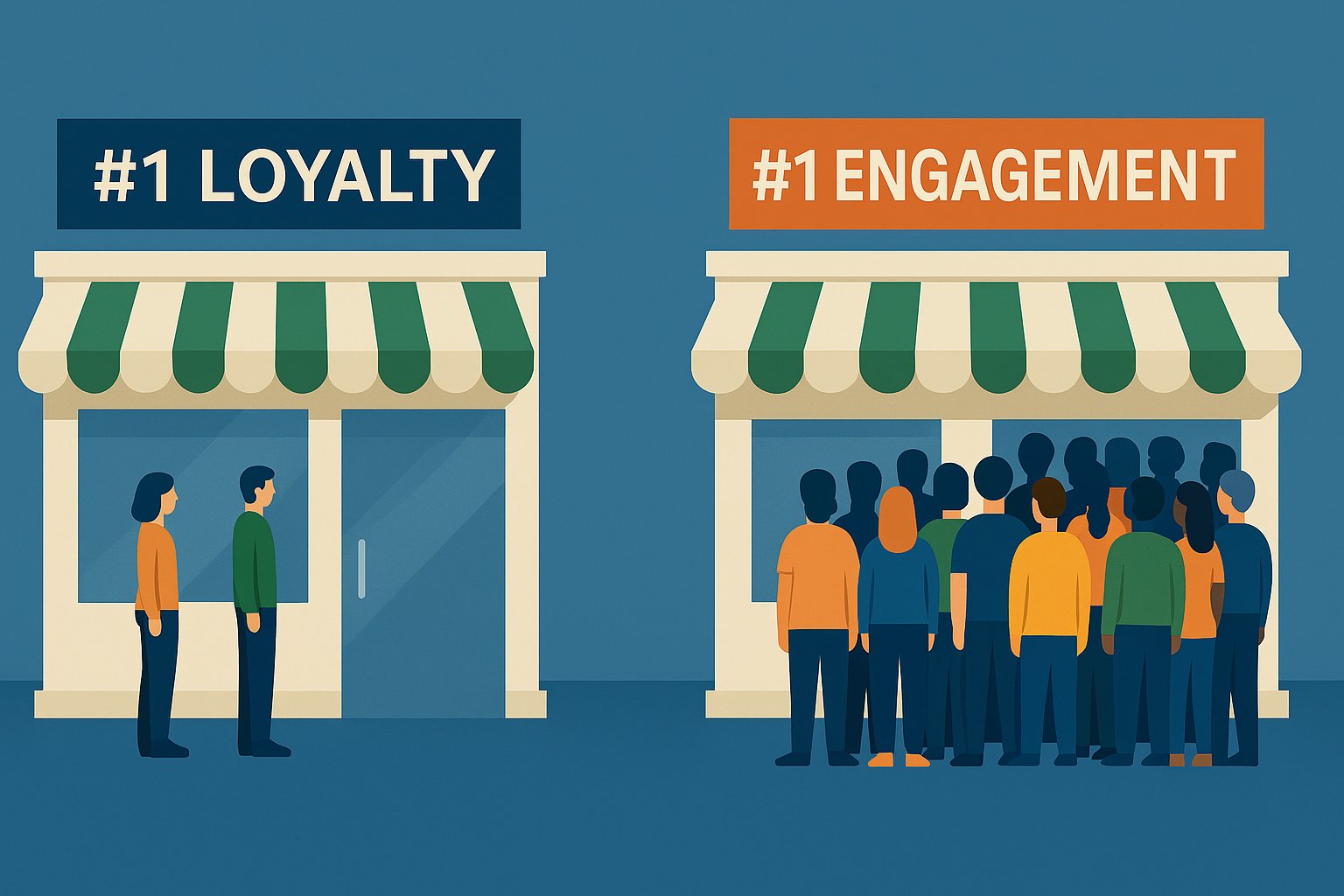
Over the last four days (Part 1, Part 2, Part 3 and Part 4), we’ve stripped away the "McMiracle." We’ve seen that the 2.6x frequency lift due to new member loyalty program adoption and the long-term incremental 15-20% member spend rule-of-thumb are hard to validate mathematically, and short-term loyalty gains and then regression to the mean are largely a byproduct of selection bias, a 120-day novelty spike, and the consumption ceiling of human appetite.
So, where does that leave the loyalty practitioner in 2026?
It leaves us at the end of an era. We have hit a limit on what points programs can do. When every brand has an app, and every app offers a variation on “collect points and get a free item after ten purchases”, the incentive is neutralized. You aren't driving loyalty; you’re simply participating in a subsidized price war.
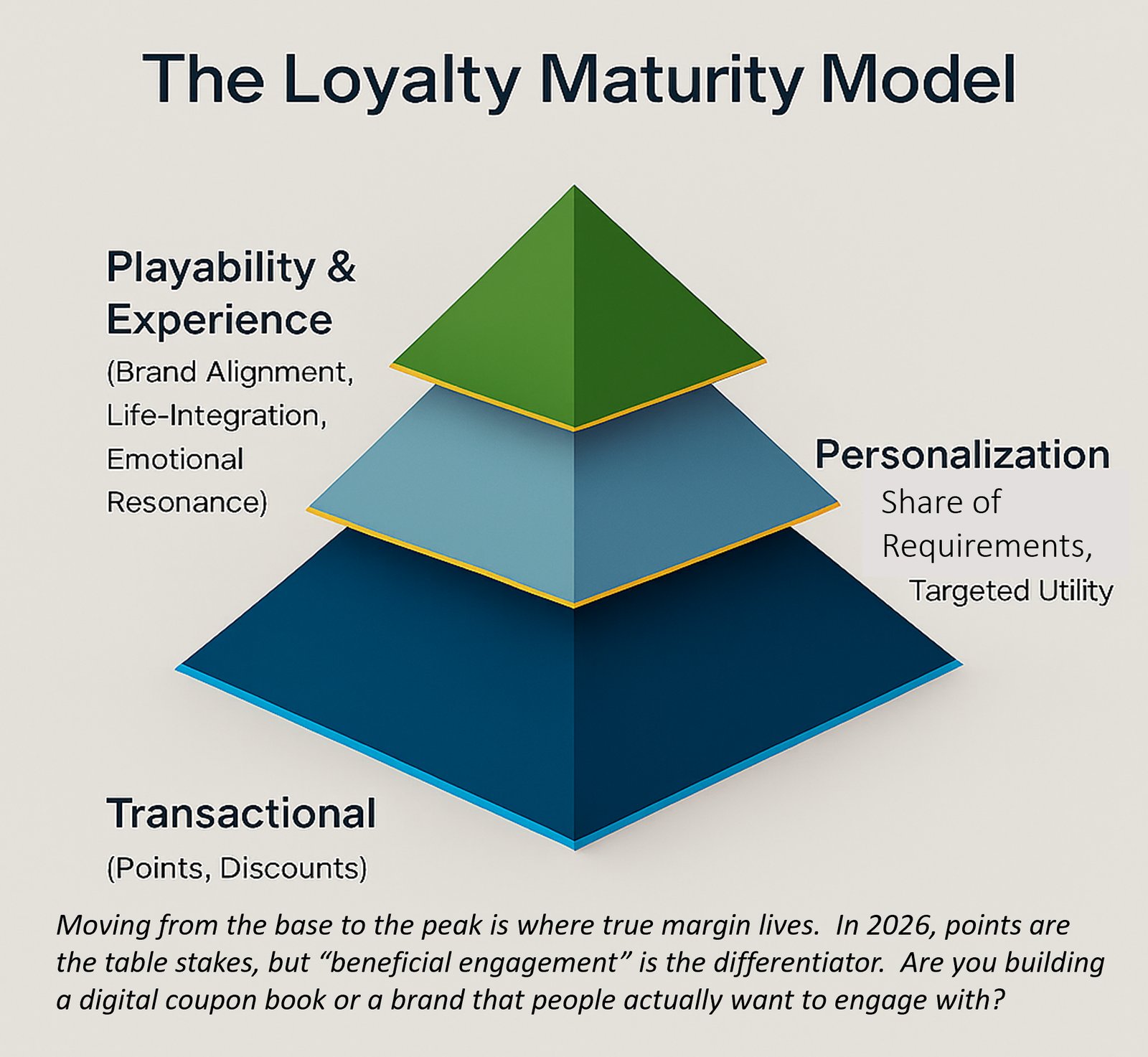
In 2026, the brands that win won't be the ones with the best points-per-dollar ratio – if that was true, Subway would be on a tear with their recent “buy four get one free” Sub Club offering. But they aren’t. The winners will be the ones that stop trying to optimize points earning and redemption schedules, and move from transactional loyalty towards true and sustainable engagement and brand preference. If your loyalty program isn't seeing the results promised by industry rules of thumb, it’s time to stop trying to buy visits and start earning them through these three strategic shifts.
1. Pivot from "Earn & Burn" to "Frictionless Utility"
Most programs focus on the reward at the end of the earning activities. The winners in 2026 will focus on the friction during the transaction. If the app can’t make them eat more, it must make their life easier - and the loyalty component should become incidental to the actual delivered benefit.
The Glide Path: Use your data to remove as much friction from the transaction as possible. Most brands are already doing this as part of their digital CX initiatives, but it must extend to rewards, which in many cases remains a clunky detour. Use your loyalty currency to steer customers toward the most frictionless channels. For example, offer extra points for first time using "One-Touch Re-order" or "Pre-Staged Proximity" features. You are essentially paying them in points to adopt the habits that make your brand the path of least resistance.
Integrating the Reward: Loyalty shouldn't be a coupon hunt or a separate tab. It should be an automated assistant. If a customer has enough points for a free drink, the app shouldn't wait for them to find the Rewards tab. It should suggest: "We see you're ordering your usual Tuesday lunch - would you like to use your points to make that drink free with one tap?"
The Goal: To make choosing a competitor feel like a logistical chore. In a world of infinite choice, making it easiest to choose your brand is a winning strategy.
2. Focus on Share of Requirements among the Fickle
Customers don’t think of themselves as "loyal" or "at-risk" or “switchers.” Businesses should stop thinking of them that way as well. In restaurant and retail categories, for example, consumers are naturally fickle. They seek variety, respond to convenience, and have different needs for different occasions. That doesn’t mean they’re disloyal, and it isn’t a customer problem to be solved - it’s a category reality to be navigated.
The goal of your efforts shouldn't be to chase an unmeasurable state of emotional loyalty. It should always be to earn a higher share of requirements, which will manifest itself as profitable, incremental spend. The good news is that in many categories, like restaurants, you don’t have to try to identify the customers who spread their spend across 3 or 4 competitors, it’s all of them. But this means moving from backward-looking discounts to anticipatory service.
Anticipate the Need-State: Use your first-party knowledge to meet them where they are. If your data shows a customer usually orders a family-sized bundle on rainy Tuesday nights, don't wait for them to open the app. Send a "One-Tap Dinner is Ready" notification at 4:30 PM when the forecast turns. And if they tend to dine alone during lunch hours, make a morning suggestion more in line with their lunchtime history.
Solve the Immediate Problem: "Targeted utility" means recognizing their current friction. If a customer is near a location that currently has a long drive-thru line, use your app to redirect them to the curbside pickup spot and position it as a "VIP Instant Pickup" reward - automatically applying a small point bonus for helping you balance your store's throughput.
The Goal: You aren't trying to change their biology or force 100% loyalty; you are using your data to offer the path of least resistance the moment a hunger or shopping need arises. You win the fickle middle by being the brand that actually knows what their Tuesday afternoon feels like.
3. Building Playability and Emotional Resonance
Most programs are accounting exercises: do X, get Y. But more sustainable engagement is the real prize, and that requires moving beyond the ledger toward "playability." This concept, pioneered by experts like Steve Bocska , borrows from the gaming world and suggests that emotional engagement sustains consumer interest and survives market changes better than transactional "earn & burn."
This isn't about the mechanics of “gamification” – badges, levels, etc.; it’s about ensuring the program aligns with your brand promise and how consumers actually behave in your category.
Preference over 100% Loyalty: Variety is commonly part of the category appeal. A "playable" program acknowledges this. It makes the brand the default choice, garnering the greatest share of requirements, because each interaction itself, and the way the program fits the category, is intuitive and rewarding in some way.
Stay Relevant "Outside the Window": Most brands only engage during the 20-minute ordering and dining window. To build preference, you must be relevant when they aren't hungry. If your brand stands for "Adventure," your program should reward exploration of your menu or community, not just repetition of one item.
The Goal: Build a program that aligns with the customer's lifestyle. When the program feels like an extension of the brand's core value, you create a stickiness that survives competitive threats.
The Takeaway: Preference over Points
Loyalty has become a data collection strategy masquerading as a marketing tactic. In 2026, don't chase the phantom of a 2.6x lift because of an appealing rewards schedule. Move your program up the maturity model from a digital coupon book to a tool of preference and playability. The top-line never lies. Win the fickle middle by being the easiest, most relevant choice in their day, and the incremental lift will take care of itself. And that has everything to do with the brand experience, not the number of points on offer.
Agree or disagree? Would love to hear your feedback and thoughts.
Thanks for following along with this series. If you missed any of the data deep-dives, you can find the links to the other four entries in the first paragraph.
View original on LinkedInWant to discuss this further?
Our team thinks about these problems every day. Let's start a conversation.
Book a discovery call