I was reading a recent piece published by Kobie (https://kobie.com/the-growing-gap-between-loyalty-promises-and-the-modern-travel-experience/) on the growing gap in travel loyalty, and one paragraph really jumped out at me:
" The next evolution of travel loyalty is about balance. It’s about continuing to deliver elevated recognition for high-value guests while also creating clear momentum and value for the everyday traveler. In a market where loyalty is no longer defined by frequency alone, relevance has become the real differentiator."
How does this line up in the context of Delta Air Lines' recent Investor Day highlights, where CEO Ed Bastian noted that 95% of Delta’s revenue now comes from households earning $100k+, and for the first time, premium seat revenue has overtaken the main cabin? Going further, if the premium guest is paying the bills, why should loyalty programs invest in “relevance” for the casual or occasional traveler?
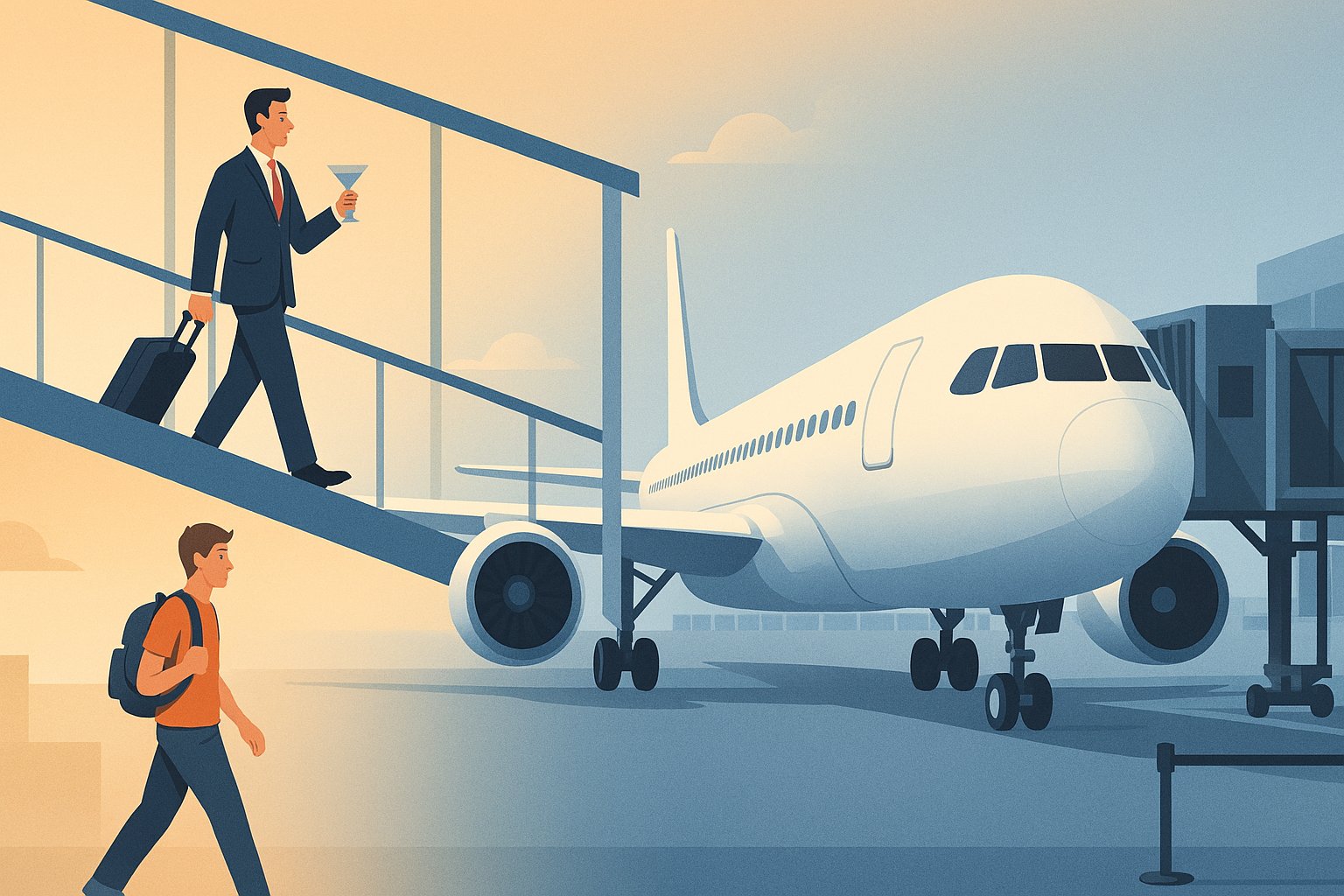
It could be that what the Kobie article is really saying aligns with a more financially-grounded view, suggesting that the travel industry isn't building a graduated ladder of loyalty anymore. It is building a bifurcated relationship ecosystem - or two-tiered loyalty program, with the top tier designed for engagement and long-term relationship building, and the bottom tier designed for market maintenance.
Start with some thoughts about the airline industry.
1. The FinTech Engine: Tier 1 (The 95%)
As noted above, Delta recently reported that 95% of its revenue comes from households earning more than $100K. This isn't just a throwaway statistic; it's a structural reality across the three full-price airlines (Delta, United, American), that have essentially become financial services companies with wings. For them, loyalty is a high-margin ecosystem, with premium travelers not only driving more margin on flights, for example, 3-4x revenue and margin per seat, but also fueling incredibly lucrative co-branded credit card partnerships. Meaning that to keep them loyal, it makes sense for airlines to invest in meaningful experiential membership perks: lounges, upgrades, and premium seating.
2. The Margin Trap: Tier 2 (The 86%)
Then there is "everyone else." According to industry stats, the flying profile of the American consumer is starkly binary:
0 Flights/Year: 42%; 1–2 Flights/Year: 44% (The "casual" base)
3+ Flights/Year: 14%; only 7% fly 5 or more times per year
For that 44% who fly once or twice a year, the math supporting loyalty and relevance simply collapses.
IATA puts net profit per passenger in the United States at roughly $13.10. For a casual traveler taking two trips annually, that is a total of $26.20, not a lot of cushion to support the cost of personalization and enhanced outreach, not to mention membership benefits or rewards.
A non-elite member on the big airlines earns 5 miles per $1 spent; on a $350 base fare, they earn 1,750 miles. According to NerdWallet (https://www.nerdwallet.com/travel/learn/how-many-miles-for-free-flight-by-airline), the big airlines now offer a dynamic award pricing system, with some free flights available for as few as 5K or 7K miles, but mostly the requirement is much higher. For the casual flyer, that still means it could take three or more years to earn a base reward. That isn't a loyalty program; it’s a long-term accounting liability.
This bifurcation isn't unique to airlines; it has consumed the hotel industry as well. The major players, including Marriott, Hilton, and IHG, have moved to an "asset-light" model, in which they no longer own the physical properties, instead they license the brands while they own the data and the reservation system. So their focus is truly on their most frequent guests, operational efficiencies no longer matter to them.
For an occasional guest who belongs to bottom tier of a hotel loyalty program, this dictates a couple of realities.
The special Member Rate they are offered isn't a reward, it's a defensive tool to prevent travelers from booking via third-party sites like Expedia, which take a 15–25% commission.
Earning 10 points per dollar on an occasional stay means it will take years to earn a free night at a high-level resort. The rewards program doesn’t really offer much to them by way of actual rewards. Meanwhile, more frequent guests with a co-branded credit card receive welcome gifts, room upgrades, free nights, and other physical amenities.
So, with this in mind, why is Kobie seeing a shift toward the casual traveler?
Airlines and hotels have already captured the high-earners, and most of them are already locked in to their preferred travel providers, so there’s not a lot to be gained by chasing switchers in these categories. To find the next dollar, they are moving into a maintenance phase for the masses:
Forward Planning: Brands keep casual travelers in their app via automated digital touchpoints simply to ensure they are the default choice if/at the moment their travel frequency or income scales. They aren't being engaged; they are being kept in a low-cost holding pattern.
Market Share Moat: Basic Economy fares and Member Only hotel rates aren't profit centers; they are exit barriers. They exist to stop the 44% of occasional travelers from leaking to low cost carriers or alternative booking sites and staying there forever.
Data as an Asset: If you are in their ecosystem, they own your data. That data not only supports minimal levels of engagement marketing, but also operational analysis and planning – and shields it from competitors.
The heavy lift for loyalty for travel brands in 2026 isn't making the everyday traveler feel like a VIP. How will they win? By simultaneously:
Using experiential rewards to lock in loyalty from their highest-margin travelers.
Building a digital-only ecosystem that maintains the illusion of membership and exclusivity for occasional guests, without ever spending a dime of that $13.10 annual margin in order to provide a tangible physical reward or benefit.
In other words: relevance. To two different classes of travelers, without alienating either one. That will require a heck of a balancing act, back to Kobie’s original framing.
View original on LinkedInWant to discuss this further?
Our team thinks about these problems every day. Let's start a conversation.
Book a discovery call