The Truth About "Signals": Why Real-Time Intent is Overriding First-Party Models
Alongside "causal," the other term dominating marketing vocabulary right now is "signals."
For the last few years, the industry narrative was clear: collect as much first-party data as humanly possible, clean it up in a CDP, and build predictive models to forecast what your consumers will want next month.
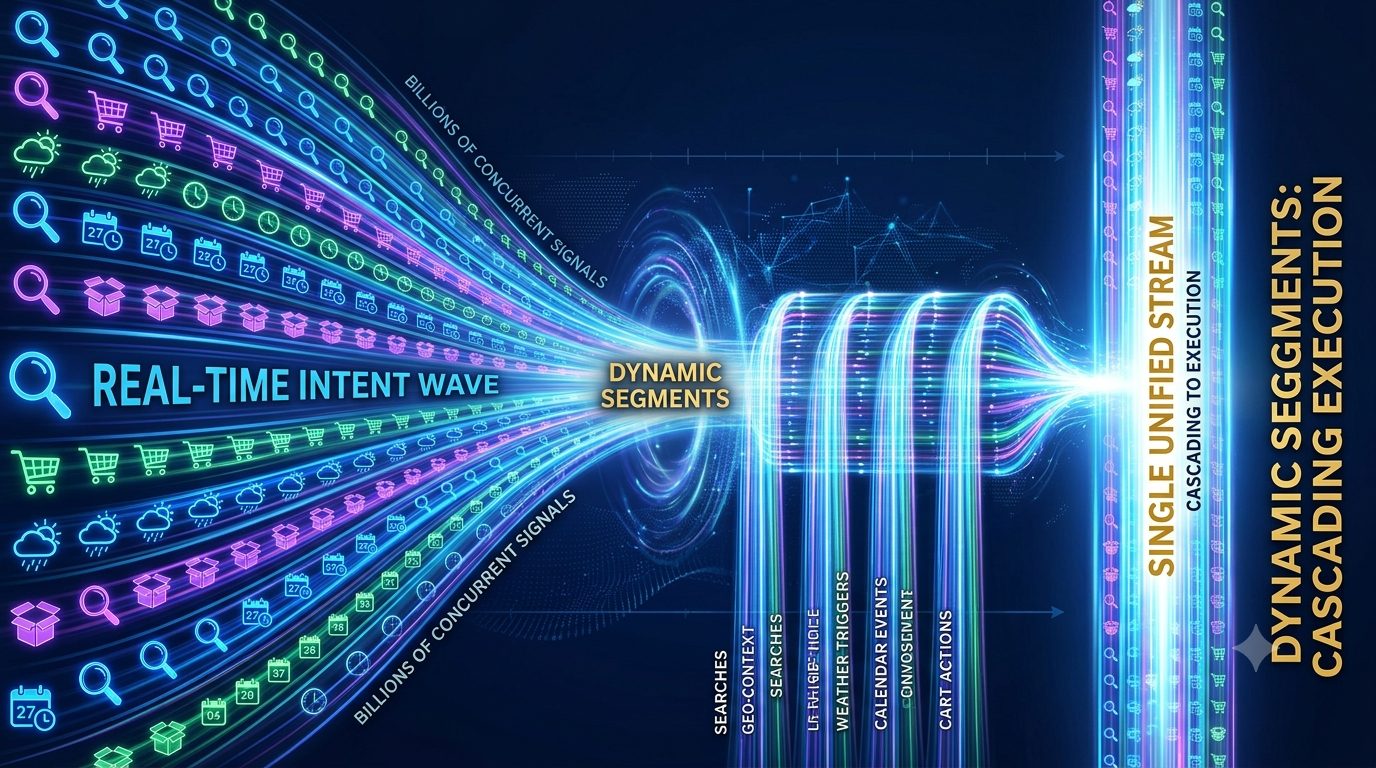
But more recently, the spotlight has dramatically shifted. Real-time "signals" - live, dynamic behavioral breadcrumbs - are overriding historical predictive models.
The question we need to ask is: Is this shift actually making marketing more accurate, or are we just falling for a new wave of manual guesswork?
To see why real-time signals can be incredibly lucrative, look at how fast consumer intent shifts.
Imagine a retail consumer. A legacy first-party predictive model looks at their historical data: they bought a pair of running shoes nine months ago, live in a specific zip code, and open your emails twice a month. The model predicts a low purchase probability for the current week.
But real-time signal data bypasses history. Instead of looking inside your own ecosystem, a third-party signal aggregator captures macro-intent across the web: that same consumer just executed a search for "waterproof trail shoes," read a blog post comparing off-road footwear, and clicked a local weather alert about an upcoming storm system in their area, all in the last day. The time to reach them is now!
In consumer marketing, recency and context beat history every single time. Real-time signals allow brands to capture the brief, hyper-specific windows of consumer intent before they slam shut.
The data backs this up. According to data analysis by Landbase , organizations that pivot away from traditional, static lead scoring to an automated, signal-qualified model report a 47% improvement in conversion rates. They aren't changing their product; they are just striking when the intent window is wide open.
That said, there is a massive roadblock in how "signals" are being leveraged today.
Many modern platforms pitch signal-based marketing, but they require a marketer to sit down and manually select a static list of attributes or triggers, as in "If a user does X and lives in Y, trigger Z". This is just subjective, judgmental filtering disguised as modern tech. If we rely on human intuition to guess which signals matter, we inherit the same blind spots we've always had.
Where signal tools desperately need to evolve is pure automation.
Marketers don’t need more tools suggesting they build their own workflows or write their own complex rules. The true next generation of this tech needs to handle the heavy lifting natively: ingest the raw, unstructured real-time signals, dynamically group consumers into live-updating target segments on the fly, and hand those segments to the marketer on a silver platter.
Real-time signal data is incredibly rich, tracking immediate behavioral velocity across the digital ecosystem. But to make it accessible and genuinely superior to first-party predictive models, it cannot be left to human guesswork.
The true winners in this space won't be the companies manually offering arbitrary triggers. They will be the ones utilizing machine learning to let the data, not a marketer's assumptions, dictate the play.
Is your team building a truly automated, responsive signal engine, or are you just manually filtering near-real-time data? Let's talk below.
View original on LinkedInWant to discuss this further?
Our team thinks about these problems every day. Let's start a conversation.
Book a discovery call