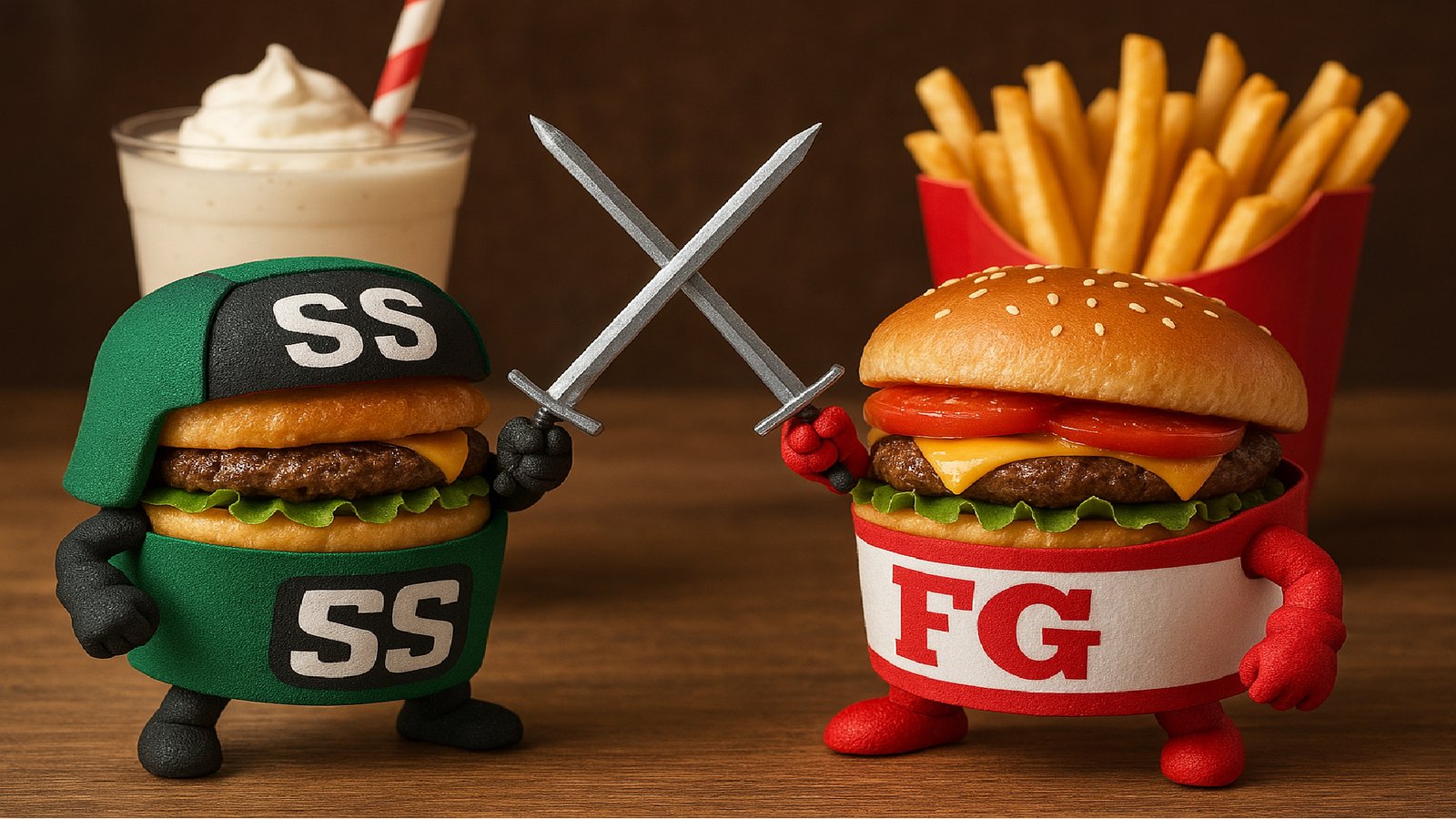
The other day comes news that Shake Shack has launched a loyalty program:
According to PYMNTS (https://www.pymnts.com/news/loyalty-and-rewards-news/2025/shake-shack-launches-loyalty-program-for-online-and-app-orders/),
“Bloomberg reported Wednesday that Shake Shack decided to launch its first loyalty program after completing a successful test earlier this year. In that test, the company found that the loyalty offering led customers to visit more often than they would have otherwise.”
and we also find that
“Shake Shack chief growth officer Steph So described the strategy as intended to encourage repeat visits and incentivise app downloads and sustained usage.”
Is that a good idea?
It is definitely not a points or traditional rewards program, more along the lines of in-app promos for registered app downloaders, with an element of gamification to try to drive incremental visits and spend. How does it work?
- App users can purchase small or large sodas for just $1
- There are ongoing challenges, including two released at launch:
- Challenge 1: Order any burger on two separate occasions within 30 days to receive $10 off your next visit.
- Challenge 2: Order any BBQ sandwich on two separate visits before Aug. 6 to unlock $5 off your next visit. This challenge is focused on the chain’s new Summer BBQ LTO platform.
This is in line with my hypothesis from a while back (https://nventiv.ai/resources%2Fblog/f/the-future-role-of-rewards-for-restaurants-part-3) that brands were going to gain benefits primarily from consumer use of the app, with it used more as a mechanism to deliver targeted promotions, and that “rewards” would be increasingly less important over time.
Given that Shake Shack, along with Five Guys Enterprises , were named as the two most overpriced chains in an analysis published in December 2024 (https://retailwire.com/discussion/shake-shack-five-guys-overpriced/), it is a fair question whether or not the Shake Shack program is a good idea for a premium brand. And thinking about the dynamics here could be instructive for others – in fact, we could consider it through the lens of whether a competitive brand, Five Guys, should enter the fray.
Let’s start by looking at context.
- Five Guys is a leader in the category, ranking #40 on the list of NRN top 500 restaurants in 2022 and around the same in 2023, the highest ranked premium-priced QSR burger chain on the list. Shake Shack was #64 in 2022. SS reported flat YoY same-store-sales in 1Q 2025 (https://finance.yahoo.com/news/shake-shack-nyse-shak-reports-115133012.html)
- Five Guys is privately held so it doesn’t report financials, but from QSR Magazine, we learn that
US Sales AUV Units
2023 2,204 1,718 1,409
2024 2,626 1,811 1,484
Doing some simple math, if new stores deliver revenue at the same rate, YoY same-store sales from 2023 to 2024 must have increased, even as the category struggled and NRN reported a decline for Five Guys a year earlier.
So Five Guys are leaders in the premium QSR burger sub-category, with flat to slightly increased YoY sales, ahead of specific competitors and a broader competitive set.
Now think about the reasons a brand might have a loyalty program. The (not comprehensive) list below describes what a program is supposed to do, but not why you would go down that path. Remember, a loyalty program is a long-term commitment and promise to consumers, far different that an LTO.
- Encourage repeat purchases and profitable incremental spend
- Increase marketing ROI by retaining existing customers/keeping them active longer
- Facilitate upselling and cross-selling, and personalized experiences
- Show gratitude to build relationships
- Provide differentiation vs competitors
- Provide a research/first-party data collection platform
- Provide a channel for feedback from frequent customers
- Encourage brand advocacy and WOM
What about the “why”?
- High purchase frequency or potential for repeat business, or less frequent purchases but high degrees of consideration and/or spend
- Desire for increased insights at individual customer level
- Business objective of increasing CLV
- Desire to build stronger brand affinity
- A highly competitive environment (ah, the Prisoner’s Dilemma – if everyone else has one, I have to have one too!)
Back to Five Guys. Should they have a program?
Pros
- Ongoing pressure to improve financial performance
- Increasing competitive threats and alternatives for consumers, from within their sub-category and from substitutes
- Reinforce brand among existing fans
- Increase data capture to support long-term strategic initiatives
Cons
- Already financially outperforming the category
- Existing positioning as a premium product and leader in their sub-category with no history of utilizing coupons or price promotions
- Limited menu with few opportunities for upsell/cross-sell
- Passionate fans who are not deterred by high prices
- Does not offer potential for significant differentiation
Assessing them on these dimensions, and looking at their financial performance, if I was advising them, it seems hard to make a case for Five Guys to launch a loyalty program, especially a points or rewards program. A “me-too” program could even cheapen the brand. You could certainly argue the same for Shake Shack, although they do have more of a history with price promotions and coupons.
This will be worth following - the Shake Shack program will provide plenty of learnings!
View original on LinkedInWant to discuss this further?
Our team thinks about these problems every day. Let's start a conversation.
Book a discovery call