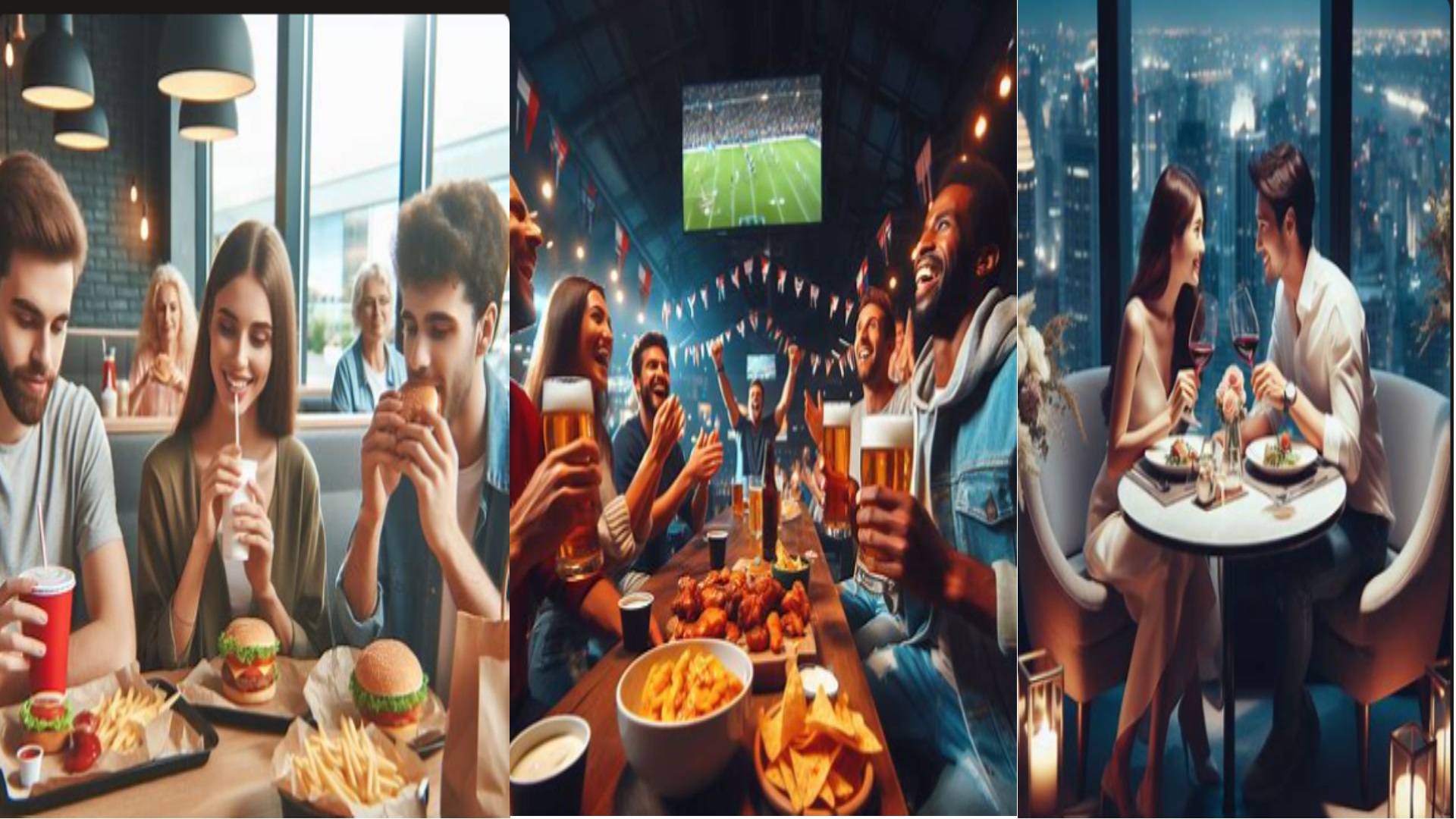
In the previous two posts in this series, we talked a lot about the “digital experience” which is definitely more impactful in QSR and fast casual than other dining tiers. In this post I will make sure to also address the future of how rewards may or may not play a role in casual dining and finer dining.
Why the focus on QSR? Rewards programs are much more common in that tier. Additionally, many of the features that apps facilitate, like order ahead, may be critical functions for QSR and fast casual, but aren’t necessarily relevant for casual or fine dining. For them, the digital experience may relate more to take-out, but also things like wait lists, priority table selection, tracking previous orders, paying and splitting checks by phone, sending electronic gift cards, ordering for delivery, tracking dietary restrictions, etc. And those may not be the primary decision drivers when selecting a restaurant.
How do I think the role of rewards programs in restaurants will evolve in the future?
QSR
- Leaders - This includes chains like McDonald’s, Subway, Domino’s etc. that have a broad footprint, high visit frequency, and category leadership, and may even have developed a consumer habit, like Starbucks. Expect these to continue to step down the value of rewards and even phase them out over time. Shifting from spend-based to visit-based rewards may be a first move. Members may grumble but will quickly fall back into their visit routines. Apps will be used as a platform that delivers increasingly tailored offers and promotions based on individual purchase history.
- Strivers - These may have a large footprint but are decidedly lower in market share, may have lower visit frequency, etc. Jersey Mike’s and Panda Express would be examples. Expect these to move away from spend-based to visit-based, as Subway and others have recently done. They’ll keep some form of rewards because they need leverage to win the decision-making process.
- Laggards - think smaller or regional chains, like Zaxby’s, Moe’s Southwest Grill, Captain D’s, or other chains that are once-in-a-while decisions. They will maintain high-value rewards programs as a primary component of their apps, because they need to offer consumers a special incentive in order to remain relevant. In fact, I expect they will offer increasingly richer rewards over time to maintain consumer attention.
Casual Dining/Fast Casual
Rewards will continue to be a common feature for these chains. There is a lot of competition for consumer attention, and unlike QSR which may be used simply to fill a need for nourishment, casual dining is a more considered decision and rewards can play a role. They also have higher price points and can better sustain rewards, although they will continue to shrink the giveback. Buy 12 Get 1 vs Buy 10 Get 1, shorter redemption windows, more frequent points expirations baked in the T&Cs, will all become more common. We will continue to see experimentation with subscriptions and membership - in some ways as promotional traffic drivers, in other ways to enhance the experience. More and more will be the use of identification upon arrival facilitated by app check-in, which will lead to enhancements in the dining experience, not just identification at payment time, which is still more common today. Rather than simply a vehicle to drive promotional discounts, the rewards programs will also provide opportunities to deliver surprise and delight offers and other value-adds. The app itself will additionally help drive down costs for the restaurant, as it will increasingly be used to facilitate ordering and payment, and will reduce staff interactions. Buffalo Wild Wings and Red Robin, among others, are already doing this today, for example. Further emphasis on takeout ordering, pre-ordering prior to arrival, tracking preferences and personal details, e.g. dietary restrictions, and tailored offers and promotions based on personal history will be frequently utilized..
Fine Dining
There is often a fuzzy line between how restaurants may be classified. For this discussion, I would consider higher-end chain restaurants like Bonefish Grill or Fleming’s to be more akin to casual dining establishments than standalone fine dining.
I don’t expect the use of rewards in this category to change much - few restaurants in this category currently offer rewards programs; if they do, it is less common for stand-alone and more likely as part of an ownership group like Landry’s or Lettuce Entertain You. Why are rewards not widely used in this category? The experience is the thing, so rewards programs may be viewed as cheapening a full-service brand. The frequency of visits is lower than for other categories, meaning a rewards program is unlikely to be a tie-breaker that influences selection. And given the typical price points, “giveback” rewards may not be meaningful to the patron. That is not to say that there won’t be efforts to encourage exclusive “membership” features - we’ve seen that in the past. Card-linked and app-linked features may also be used to facilitate reservations, track personalization characteristics like birthdays and anniversaries, etc.and ease the payment process. But the digital experience in this category will remain subordinate to the actual experience in building loyalty.
--
Are there evolving ideas that will take the place of points-based rewards programs? As mentioned above, subscriptions, “memberships” and other ways of strengthening customer relationships will remain the subject of experimentation, but probably don’t have broad applicability (https://www.dontwasteyourmoney.com/restaurants-with-subscriptions-for-frequent-customers/), or sustainability, outside of a small number of brands. Few restaurant brands have the market power to implement a broad-based “membership” program like Amazon Prime. A program like Panera’s beverage-focused Sip Club, for example, has good potential for longevity (25% of chain sales are reportedly driven by Sip Club members as of Feb 2023), but a ceiling on membership, and food-based subscriptions, like Taco Bell’s Taco Lover Pass, will only pulse in and out as promotional programs.
Broadly, restaurants, like other categories, have to keep in mind the truism that “Loyalty” is a theoretical concept that consumers don’t generally consider in their decision making - we’re really aiming to increase our brand’s share of requirements, a behavioral measure. And it is easier to motivate a behavior than create an emotion - share of wallet is what really matters… that hasn’t changed even as technological advances have changed the way businesses engage with their consumers. Rewards programs are only one mechanism to try to encourage brand preference/selection, and they only have utility when they provide value greater than that which can be delivered through other means, like tailored offers and promotions delivered directly to consumers through the mobile app.
Bottom line: If I was running advising a restaurant chain today, would I recommend a rewards program? I hate to hedge but… it depends. The characteristics of the brand (category position, distribution of visit frequency, etc.) would drive that decision. For QSR, I would be more likely to recommend something for a second- or third-tier brand, with less frequent visit patterns, maybe satisfying a craving rather than a meal, than I would for a category leader. For casual dining, a program likely makes a lot of sense, because their margins can better support rewards, and the lure of rewards may play a significant role in decision-making. For finer dining, I would be much less likely to recommend rewards, and more likely to explore creative ideas about how the brand could deepen relationships with it’s most valued customers by leveraging opportunities provided by a digital connection.
View original on LinkedInWant to discuss this further?
Our team thinks about these problems every day. Let's start a conversation.
Book a discovery call