For years, B2B marketing has operated on a predictable behavioral loop: create interest, drive a click to a website, capture an email via a PDF download, and track how long prospects stayed on the page.
Those metrics were always simply proxies for intent, but they gave us a clean, trackable data trail, and as flawed as they were, there weren't better options.
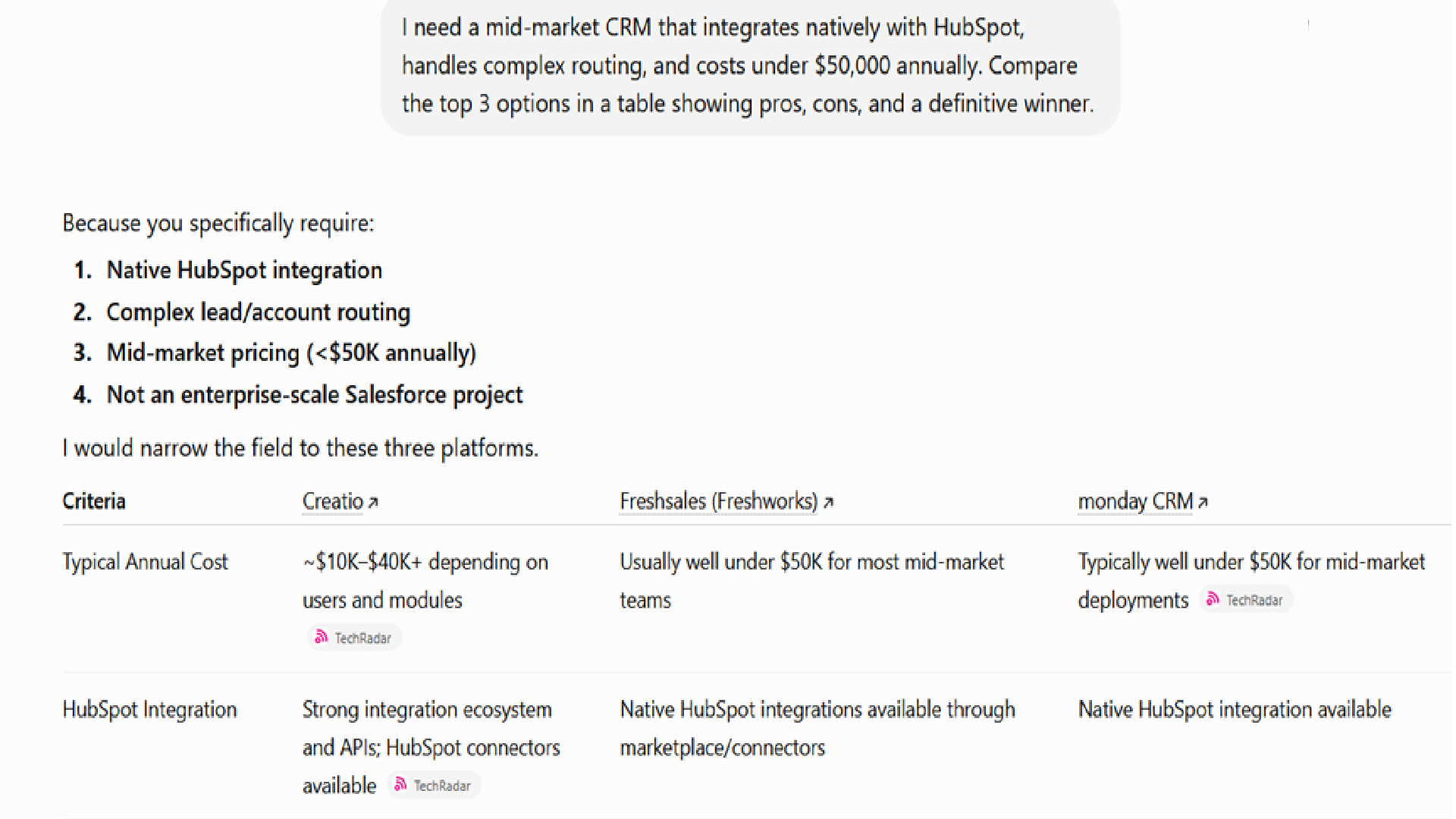
Today, that data trail is evaporating. Recent 2026 market data shows a massive, structural industry shift away from traditional web traffic toward AI-driven search models. With the explosion of Answer Engine Optimization (AEO) and Generative Engine Optimization (GEO), buyers are using platforms like ChatGPT, Perplexity, and Google AI Overviews to perform top-of-funnel research and free up their time. A buyer can query: "What is the best mid-market marketing analytics tool for a team using HubSpot?" and receive a synthesized, highly specific recommendation.
The AI reads your site in microseconds, summarizes your value proposition, and hands it to the buyer. The buyer got exactly what they needed, but your Google Analytics report shows a big fat zero.
Traditional digital metrics aren't just dropping; they've become commercially meaningless. When the middleman is a machine that synthesizes data instantly, we have to completely redefine how we measure marketing influence.
As buyers rely more on AI summaries, they simultaneously crave validation they can trust. Because AI engines constantly scrape third-party peer review platforms (like G2, Capterra, or TrustRadius) to calculate user sentiment and build recommendations, these aggregators are seeing a massive surge in strategic importance.
The AI uses these platforms to calculate user authority. If your brand doesn't have a dense, highly descriptive footprint on peer review sites, the AI engine concludes you lack market weight and leaves you off the shortlist.
If clicks, dwell time, and downloads are losing their utility, what metrics should marketing leadership actually track to justify budget and prove revenue impact?
Share of Recommendation (SoR): Instead of keyword rankings, you must track your win rate inside targeted, industry-specific prompts. If you run 50 buyer-intent prompts across major LLMs every month, how often is your brand included in the recommended top three? That is your new top-of-funnel visibility metric.
Account-Level Pipeline Velocity: Stop tracking the behavior of isolated and anonymous individuals clicking on links. Modern measurement requires shifting the B2B tech stack to tools that bypass individual form-fills to measure holistic corporate account intent and pipeline movement instead. The metric to watch is whether targeted accounts are moving faster through the sales pipeline, not whether one person downloaded a white paper.
Self-Reported Attribution (The "Sanity Check"): Because so much of the buyer journey now happens in untrackable spaces like private Slack communities, podcasts, and AI chats, traditional software attribution will consistently misreport your touchpoints. The ultimate source of truth is a mandatory, open-ended field on your "Book a Demo" form: "How did you first hear about us?" When high-value leads consistently write "You came up first in my ChatGPT research," you have your undeniable ROI anchor.
If your entire attribution model collapses the moment a user stops clicking links, your marketing strategy is built on a legacy foundation. The future of B2B measurement belongs to brands that stop tracking digital compliance and start measuring systemic market influence.
If your CEO asked you today to prove that your marketing efforts influenced a deal that closed last week, could you do it without relying on website traffic data?
View original on LinkedInWant to discuss this further?
Our team thinks about these problems every day. Let's start a conversation.
Book a discovery call