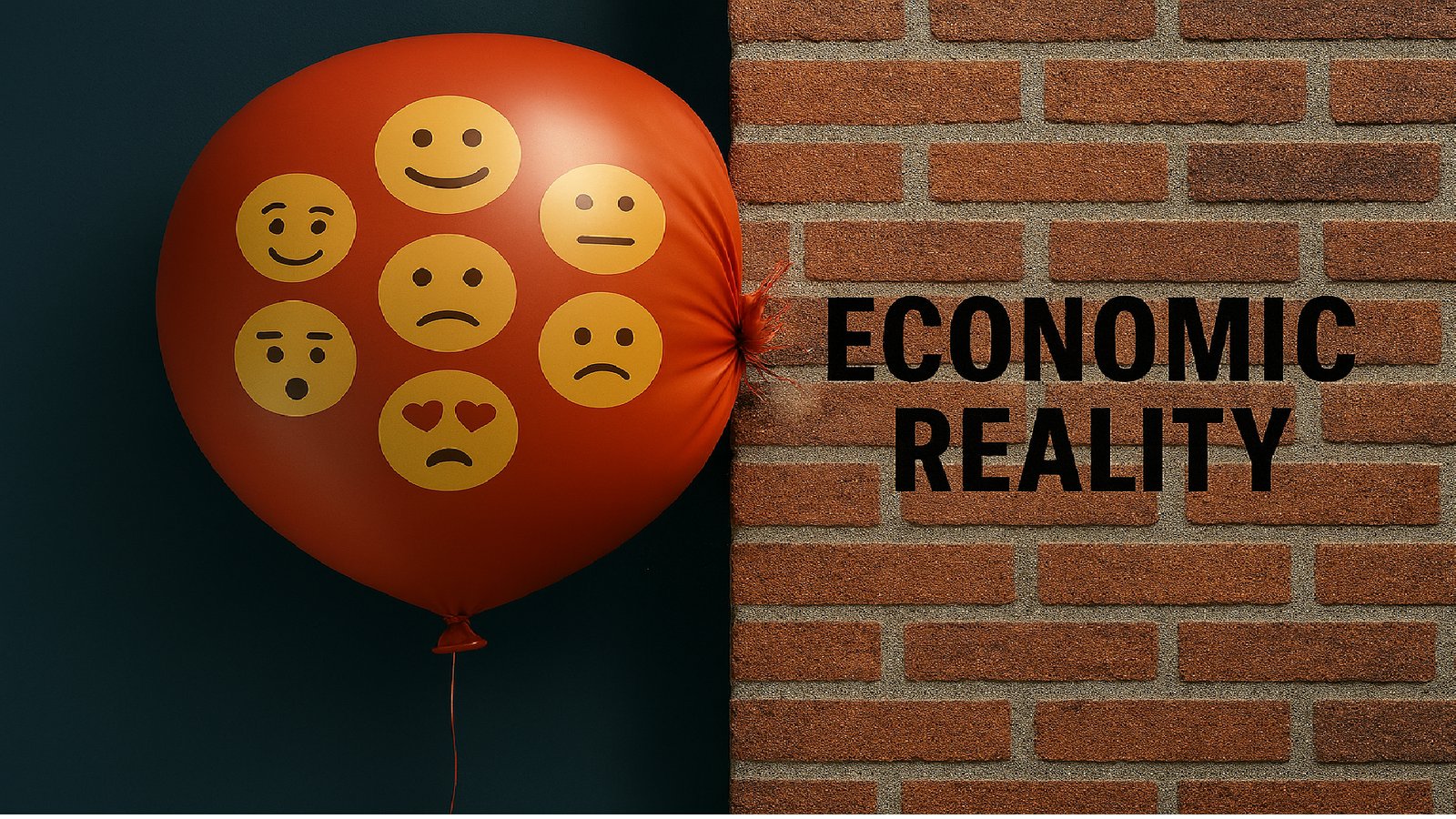
The classic paradox: what happens when an unstoppable force meets an immovable object? Here’s another: just because consumers love a brand, does that love drive increased spend?
Brand Keys released their 2026 Customer Loyalty Engagement Index (https://brandkeys.com/customer-loyalty-engagement-index/), and this year, consumer expectations jumped 32%—the largest in the survey's 28-year history—meaning even the most loyal brands are running a race they can't win.
Consider the brands in the table below. While Brand Keys identifies these as the top-ranked brands in their category for meeting expectations, their recent financial performance tells a more complex story.
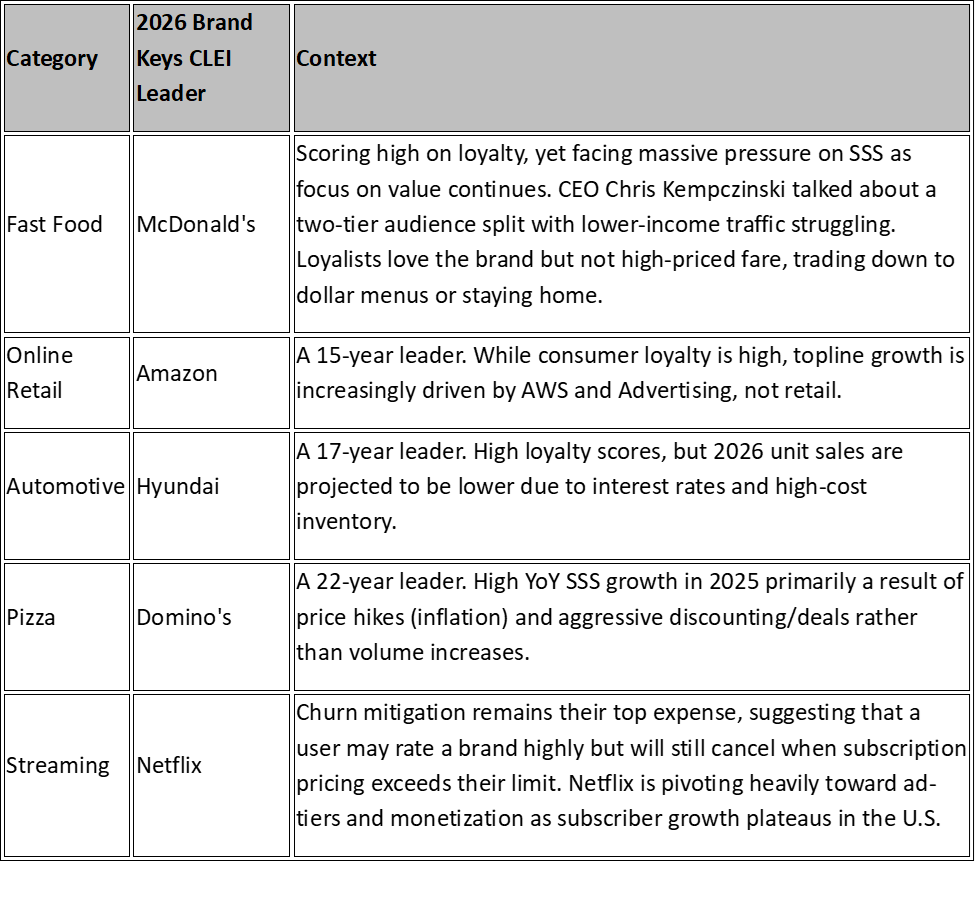
How can these two things be true at once, that these brands are the most loved and also losing ground in the market? Because there’s an increasing disconnect between sentiment and spend.
Relying on sentiment-based metrics like NPS or Brand Keys CLEI to set your expectations may be misleading or provide a false sense of security – because these metrics measure affinity (how we feel), but often fail to account for activity (how we spend) when external economic forces hit.
This is somewhat exacerbated by consumers’ short-term thinking. Medallia research from 2025 highlighted that NPS is being "abused" into meaninglessness. Consumers may give a 10 to be nice to an employee or a 0 out of frustration with a specific experience, neither of which reflects their actual propensity to spend in the future. AlixPartners' 2026 Outlook explains that consumers are in a "structural reset of value." So they might give a hotel brand a 10 on an NPS survey but then spend 40% less with that brand because they are trimming discretionary spending, including travel.
That provides some clarity. But Brand Keys also claims a 0.87 correlation between loyalty and market share. Doesn’t that suggest something is missing? Not necessarily. Consider:
It’s the old causation vs correlation challenge. Telling a mid-tier brand to increase loyalty to gain market share is like telling a runner to be faster to win the race.
If consumer expectations increase significantly, in this case 32%, you have to run twice as fast just to stand still because your competitors also know this. And if your category is stagnant or declining, the challenge is even greater for all.
Correlation measures a relationship, but it doesn't measure elasticity. For example, it doesn't tell you the exact price point at which your loyalist will cheat on you for a $2 discount.
As a CMO or growth strategist, how do you proceed in 2026? Put your NPS or Brand Keys rankings in context by developing measures that get to the concept of behavioral velocity, for example:
Share of Wallet Velocity: Is the customer spending more with you, or just "loving" you while spending their growth dollars elsewhere?
Switching Friction: If you raised prices by 10% tomorrow, would they stay because they love you, or because you’ve made leaving too difficult?
Churn-by-Cohort: Are your loyalists actually staying longer and spending more, or are you just replacing them with expensive new acquisitions?
In 2026, the brands that win won't just be the most "loved"—they will be the ones that integrate so deeply into a consumer’s technological and functional daily life that leaving becomes more expensive than staying. And then the results won’t be hard to measure.
Agree or disagree? Would love to hear what others think on this topic. Or want to chat? Find a convenient time here.
View original on LinkedInWant to discuss this further?
Our team thinks about these problems every day. Let's start a conversation.
Book a discovery call