Recently, I’ve posted things about McDonald's and Chipotle Mexican Grill and their rewards programs. I didn't set out to critique every QSR loyalty launch/re-launch, and I don’t intend to do that. But when I read about SONIC's new SONIC Rewards program it stopped me cold. Not because it's poorly built, but because of the gap between what it could have been and what they actually put in market.
As the #16 restaurant chain in the U.S. according to Technomic, Inc. , Sonic had something most brands would kill for: a clean slate. No decade-old legacy loyalty architecture to defend. No entrenched member base demanding backward compatibility. A genuine opportunity to watch other brands like McDonald's, Starbucks, and Dunkin' stumble through their own loyalty growing pains, and build something smarter.
Instead, when they could have zigged, they zagged exactly where the rest of the industry did. Right into the same trap.
On April 6th, SONIC Rewards was launched. Somewhat quietly. A story on parent Inspire's website. An email or two to existing registrants. Not much else – I couldn’t find any articles about the launch in the usual trade publications, only a few consumer social media threads debating whether it was worth participating.
On paper, SONIC Rewards is competitive with what other brands offer, maybe richer. Members earn 10 points per dollar, scaling to 12 at the top "Legend" tier. The average giveback sits around 9.2% - meaningfully ahead of McDonald's recently restructured program, which is closer to 8%, and Chipotle, which is closer to 6%. There's a welcome reward, a birthday perk, challenges, personalized offers. Pretty standard components. CMO Ryan Dickerson framed the ambition well: "Every visit should feel like a win."
The problem is the user experience doesn't deliver on that challenge. Three missed opportunities tell the story:
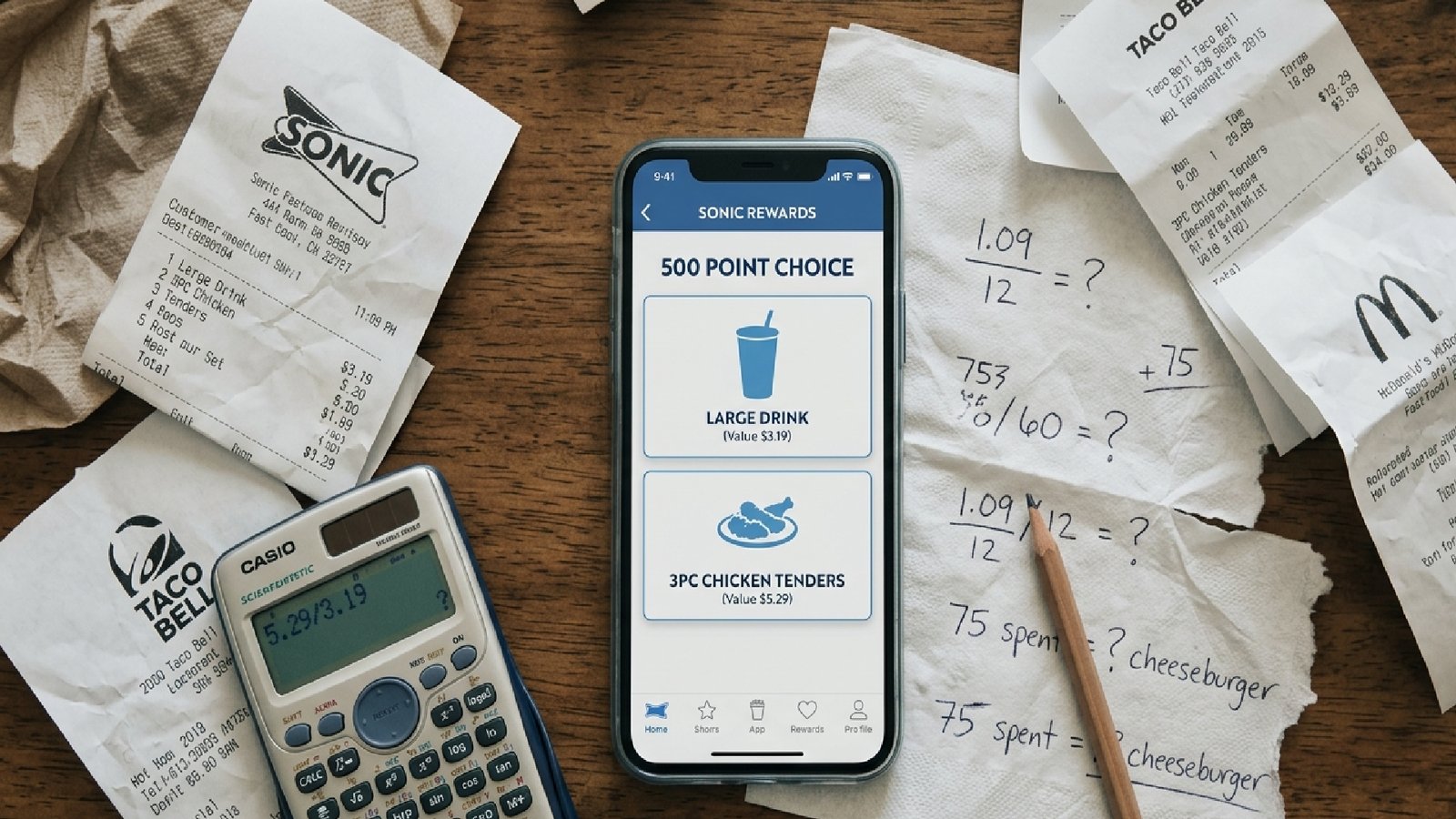
The Value Gap. A free cheeseburger requires $75 in qualifying spend. Fair enough. But Sonic's own app routinely surfaces half-price cheeseburger offers to anyone who opens it, even without having any prior purchases. Because rewards can't stack with promotional offers, the savvy customer takes the discount every time and lets their points idle. When your everyday deal outperforms your earned reward, you haven't built loyalty. You've built a balance sheet liability.
The Complexity Tax. At the 500-point redemption level, members choose between a variety of rewards, ranging from a Large Drink ($3.19 value) to a Small Shake ($4.69 value) all the way up to 3pc Chicken Tenders ($5.29 value). Meanwhile, at the 350 point level, you can get a Mini Shake ($4.49 value). The same hard-earned points can yield 40% less product depending on the choice. That's not flexibility. It's a penalty for the uninformed, dressed up as optionality. It forces the member to perform complex mental calculations every time they just want to cash in their points. And consumers will figure this out - fast.
The Identity Retreat. Half-price drinks were practically synonymous with Sonic's brand identity. Now they're locked behind Legend status, requiring 30+ visits annually to qualify. So Sonic has made customers earn back something they already associated with the brand for free. And meaning that for most customers, they’re gone. The 12-month points expiration, uncommon these days in QSR, might be intended to signal staying power of the points, but may in fact send a different message: there’s no urgency to come back.
When a loyalty program requires a spreadsheet for the member to optimize, it stops building emotional connection and starts rewarding the mathematically sophisticated while alienating everyone else.
What Sonic Could Have Done Instead
Years ago, a client I really respected (h/t Jackie Woodward, ICF-ACC ) laid out three pillars she believed were non-negotiable for passion brands, and that could be applied to any brand with an existing loyal following. They've stayed with me ever since: Build on Icons. Be Relevant in Culture. Pursue Executional Excellence.
The principle behind all three is that a loyalty program must complement the brand's positioning and lived experience: timeless but modern, appealing across all customer segments, not just the power users.
Sonic fails all three tests — and the frustrating part is they had the raw material.
Build on Icons: Drive-in culture, carhops, Happy Hour, endless customization. These are memory-makers that no competitor can replicate. Instead of architecting the program around them, Sonic stripped Happy Hour's signature value away and put it behind a tier wall. The icon became a hurdle, not a promise.
Be Relevant in Culture: Sonic's identity has always been a little playful, a little nostalgic, distinctly American. A loyalty program that leans into time-of-day rituals, unexpected delight moments, or community-driven challenges would have felt native to that culture. The program that they in fact launched could have been dropped on any of a dozen QSR brands with nothing more than a logo swap. That's the definition of a missed opportunity.
Executional Excellence: The best loyalty programs feel effortless to the consumer: earn, understand, redeem, feel rewarded. SONIC Rewards introduces low value tier hurdles, stacking restrictions, and redemption value disparities all at once. Complexity at launch is a choice, and it's rarely the right one.
The Broader Lesson for 2026
Loyalty programs are no longer a differentiator just by existing. Almost every brand offers one. And consumers have been burned enough by devalued points and bait-and-switch tiers that skepticism is now their default. They pick and choose a small number of brands with which to truly engage, and they’ll use the app for convenience and bypass the loyalty component if it isn’t compelling. The brands that win this year are those that design for felt value, not actuarial value, and that build programs which are unmistakably, emotionally theirs.
Richness on paper means nothing if the customer walks away feeling like they lost.
If you were advising Sonic's leadership today, what's the one structural change you'd make to turn SONIC Rewards into a genuine competitive weapon? And which loyalty programs, in QSR or beyond, do you think are actually getting this right in 2026?
#LoyaltyMarketing #CustomerExperience #QSR #MarketingStrategy #BrandLeadership #CRM #SonicDriveIn #marketinganalytics
View original on LinkedInWant to discuss this further?
Our team thinks about these problems every day. Let's start a conversation.
Book a discovery call